

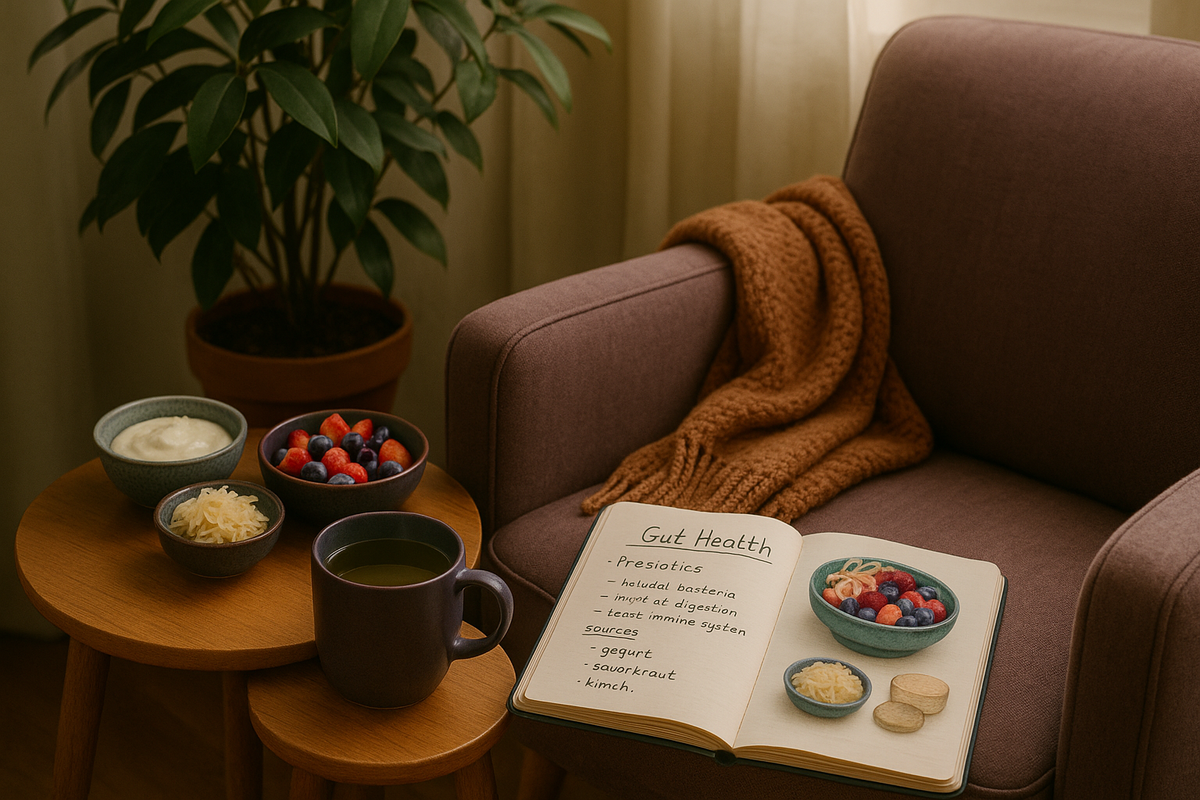
If you’re here, you’re probably tired of guessing — and you deserve a straight answer. So here it is: probiotics are a promising but still-early area for mood, not a proven anxiety treatment. What we can do is walk through what’s actually studied, so you can make a calm, informed choice.
From Flore: Want to know which organisms in your gut are shaping how you feel? The Neurobiome Test reads your at-home microbiome sample with the gut-brain axis in focus, then Flore builds a personalized formula from your data. A wellness insight, not a diagnosis.
What the research looks at
Most mood-related probiotic research focuses on the Lactobacillus and Bifidobacterium families, working through the gut-brain axis — the vagus nerve, immune signaling, and microbial metabolites. Some small human studies have explored anxiety-related outcomes, but results are mixed and strain-specific, and reviewers caution that probiotics aren’t yet a reliable therapy for anxiety.
Why “best probiotic” is the wrong question
Your gut is as individual as your fingerprint, so a strain that helps one person may do nothing for the next. That’s the core problem with grabbing a generic bottle off the shelf — it’s a guess. A more sensible path is to start from your gut data and match the formula to you.
A gentler, more personal starting point
Rather than chasing the “best probiotic for anxiety,” consider supporting your gut as one low-risk layer in a fuller plan that includes professional care, sleep, and stress tools. If your gut and mood seem linked, a personalized, data-led approach can take some of the guesswork out.
About Flore. Flore makes personalized probiotic capsules and powders (never liquid) matched to your own gut data. Flore doesn’t run the lab test itself — that’s done by CLIA-certified labs — and then formulates around your results, rather than handing you a one-size shelf product. Flore Inc. acquired Sun Genomics in 2026. Flore is a wellness product and is not a treatment, cure, or substitute for care from a licensed provider.
Not every gut problem shows up in your gut.
If stress and your stomach seem to move together, you’re not imagining it — and you don’t have to figure it out alone. Take our short, gentle gut-brain check-in and we’ll point you to a kind next step. No medical quiz, no pressure.
Frequently asked questions
Can probiotics help anxiety?
Some research on the gut-brain axis suggests certain gut bacteria may influence mood and stress pathways, and a few small human studies have looked at probiotics and anxiety-related measures. But the evidence is preliminary, and experts are clear that probiotics cannot currently be considered a reliable therapy for anxiety. They’re best seen as a possible supportive piece, not a treatment.
Do probiotics help with anxiety?
They might play a supportive role for some people, but the human evidence is early and mixed, and effects appear strain-specific. Probiotics are not a substitute for therapy, medication, or professional care. If you try one, view it as one low-risk part of a broader wellness plan.
What are the best probiotics for anxiety?
There’s no single “best” probiotic for anxiety — the most-studied genera in mood research are Lactobacillus and Bifidobacterium, but effects are strain- and person-specific. Because your gut is unique, an approach matched to your own microbiome data makes more sense than guessing from a shelf. Talk to a provider, especially if you take other medications.
This article is for general wellness information and is not medical advice. Probiotics are not a treatment or cure for anxiety, depression, or any condition. If anxiety is affecting your daily life, please reach out to a licensed health-care provider — and if you’re in crisis, call or text 988 (US) for the Suicide & Crisis Lifeline.
Related: curious how Alflorex (Bifidobacterium longum 35624) stacks up for anxiety? Read Alflorex and anxiety: what the evidence really shows.
Related: caffeine can mimic and amplify anxious feelings — read does coffee cause anxiety?
Related: see what the research actually shows on probiotics for depression and anxiety — including two meta-analyses and why strain choice matters.
Related reading: Does the gut produce serotonin? — why roughly 90–95% of your body’s serotonin is made in the gut, and how gut bacteria factor in.
Not ready to test and build a custom formula? GoodOnes offers a ready-made $49 daily option — The Calm One, a targeted synbiotic for everyday focus and calm. It won't personalize to your microbiome the way Flore does, and it isn't a treatment for a diagnosed anxiety disorder — but it's a simple place to begin.
Not sure where to start with your gut?
Ask the Flore Microbiome Concierge — a guided, personalized walkthrough of testing, your results, and a formula matched to your goals.
Talk to the Concierge →Explore the gut-brain axis behind anxiety →
Go deeper on GoodOnes: Probiotics for Anxiety: What the Evidence Actually Shows →