

Yes — most of your body’s serotonin is made in your gut, not your brain. Research estimates that roughly 90–95% of the body’s serotonin is produced in the gastrointestinal tract, mostly by specialized gut cells called enterochromaffin cells. That surprising fact is one of the anchors of the gut–brain axis. Here’s what serotonin is, how your gut makes it, whether your gut bacteria have a say, and what the “90% of serotonin is in the gut” statistic does — and does not — mean for your mood.
Does the gut really produce serotonin?
It does, and by a wide margin. In a widely cited study of how gut microbes shape serotonin, the authors state that “more than 90% of the body’s 5-HT is synthesized in the gut” (5-HT is the scientific shorthand for serotonin). Reviews of gut-derived serotonin put the figure even higher: one notes that “approximately 95% of 5-HT in the body is synthesized and secreted by enterochromaffin (EC) cells,” the hormone-producing cells scattered through the lining of your digestive tract. Another review describes EC cells as a “unique subset of enteroendocrine cells” that “synthesize and secrete 90-95% of the serotonin in the human body.” So the gut isn’t a minor contributor — it’s the body’s main serotonin factory.
Where is serotonin produced in the body?
Serotonin is made in two main places. The large majority is produced in the gut: reviews estimate that enterochromaffin cells lining the gastrointestinal tract “synthesize and secrete 90-95% of the serotonin in the human body,” and a landmark study reports that “more than 90% of the body’s 5-HT is synthesized in the gut.” The remainder is made in the brain and central nervous system, where serotonergic neurons produce their own serotonin locally from the amino acid tryptophan. Serotonin also circulates in the blood — the gut supplies it “to the mucosa, lumen and circulating platelets,” which carry it around the body. So the short answer to “where is serotonin produced” is: mostly in your gut, with a smaller amount made in your brain, and some carried in the bloodstream by platelets.
What is serotonin, and what does it do?
Serotonin is a signaling chemical. MedlinePlus describes it simply as “a chemical produced by nerve cells.” It acts as a messenger both in the nervous system and throughout the body. According to a gut–brain review, serotonin “regulates pivotal peripheral and central effects, including secretion, visceral sensation, gut motility, energy homeostasis, inflammation, sleep, [and] food intake.” In other words, the same molecule people associate with mood also does a lot of practical work inside your digestive system.
How does the gut make serotonin?
It starts with tryptophan, an essential amino acid you get from food. As one review explains, tryptophan is “an essential amino acid found primarily in proteinaceous food such as milk, tuna, turkey, oats, cheese, nuts, and seeds,” and it is the raw material for serotonin. Inside enterochromaffin cells, an enzyme called tryptophan hydroxylase 1 (TPH1) kicks off the conversion — TPH is described as “a rate-limiting enzyme for 5-HT production” that converts tryptophan to 5-hydroxytryptophan on the way to serotonin, and “TPH1 is predominantly found in EC cells in the GI tract.” The serotonin those cells release then goes to work locally.
What does serotonin do inside the gut?
Once secreted, gut serotonin is a major regulator of how your digestive tract moves and works. Research reports that “5-HT has been reported to play a crucial role in GI regulation, particularly in intestinal motility and secretion,” and that “5-HT promotes intestinal motility, peristalsis, and secretion through binding to 5-HT-specific receptors.” Peristalsis is the wave-like muscle action that moves food through you, so serotonin is part of what keeps things moving. That’s a structural and functional role — not a claim that serotonin treats any digestive condition.
Do gut bacteria affect serotonin?
This is where the microbiome enters the picture. A landmark study demonstrated that “the microbiota plays a critical role in regulating host 5-HT” and that “the gut microbiota plays a key role in promoting levels of colon and blood 5-HT.” More specifically, “indigenous spore-forming bacteria (Sp) from the mouse and human microbiota promote 5-HT biosynthesis from colonic enterochromaffin cells (ECs).” Diet-fed microbes matter too: short-chain fatty acids — the compounds your gut bacteria make when they ferment fiber — help sustain the system, with one review noting “SCFAs are essential to sustain EC cell and serotonin production.” And a tryptophan-metabolism review adds that “gut microbes influence serotonin production and secretion” and that “differences in gut microbial composition and diversity can alter tryptophan availability.” The community living in your gut is an active participant in serotonin production — which is exactly why the specific mix of microbes you carry matters.
Does gut serotonin reach the brain and affect mood?
Here is the nuance that a lot of headlines skip. The serotonin your gut makes largely stays and acts in the body — it is not simply pumped into your brain. The brain makes its own serotonin. What crosses from blood into the brain is tryptophan, the precursor: the reviews describe tryptophan being transported across the blood–brain barrier (via the LAT1 transporter), where the brain can then use it. So gut serotonin and brain serotonin are best thought of as related but distinct pools that share the same raw material.
The gut and brain still talk constantly — along the gut–brain axis. One review calls the vagus nerve the “super-highway” by which “the information about luminal microenvironment is broadcasted to the brain by EC cells,” noting that “vagal afferents nerve terminals express 5-HT3R and locate in proximity to the EC cells.” In plain terms: serotonin-releasing gut cells sit right next to nerve endings that carry signals toward the brain. This is a communication pathway, not a claim that a probiotic changes brain serotonin or treats any mental-health condition.
How to support serotonin in the gut (the honest version)
You can’t “take” gut serotonin, but you can support the machinery that makes it — framed as general wellness, not treatment:
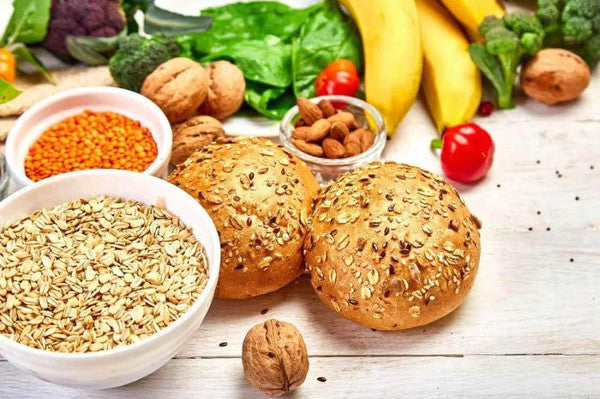
- Give it raw material. Serotonin is built from tryptophan, which comes from protein-containing foods like milk, tuna, turkey, oats, cheese, nuts, and seeds.
- Feed your microbes. Fiber-fermenting gut bacteria produce short-chain fatty acids, which reviews link to sustaining enterochromaffin-cell serotonin production. Fiber-rich, plant-diverse eating supports those microbes.
- Mind the microbial mix. Because specific bacteria (like spore-formers) can promote serotonin biosynthesis, the composition of your microbiome — not just what you eat — is part of the equation.
Probiotics are one tool people reach for here, but the evidence is strain-specific and should be framed carefully. NCCIH defines probiotics as “live microorganisms that are intended to have health benefits when consumed,” and says they “might… help your body maintain a healthy community of microorganisms.” It also cautions that “different types of probiotics may have different effects,” so one strain’s result doesn’t transfer to another. This article is educational and is not medical advice. If you are dealing with depression, anxiety, or another health condition, talk to a qualified healthcare provider — a probiotic is not a substitute for care.
Gut serotonin and personalized probiotics
The takeaway from the science is that serotonin production isn’t a one-size-fits-all switch — it depends on your enterochromaffin cells, your diet, and the particular community of microbes you carry. That’s the logic behind a personalized approach: rather than guessing which strains might support your gut, you start from your own gut data and build from there. For the bigger picture on how your gut and mind communicate, see our explainer on the gut–brain axis, and for how gut bacteria are studied in relation to mood, read about neurobiome-directed interventions (NDIs) and the gut–brain axis.
Sources
- MedlinePlus Medical Encyclopedia — Serotonin blood test. medlineplus.gov
- Yano JM, et al. Indigenous Bacteria from the Gut Microbiota Regulate Host Serotonin Biosynthesis. Cell. PMC4393509. pmc.ncbi.nlm.nih.gov
- The Mechanism of Secretion and Metabolism of Gut-Derived 5-Hydroxytryptamine. PMC8347425. pmc.ncbi.nlm.nih.gov
- Enterochromaffin Cells–Gut Microbiota Crosstalk in Disorders of Gut-Brain Interaction. PMC9274469. pmc.ncbi.nlm.nih.gov
- Tryptophan Metabolism and Gut-Brain Homeostasis. PMC8000752. pmc.ncbi.nlm.nih.gov
- NIH NCCIH — Probiotics: What You Need To Know. nccih.nih.gov
Feeling the gut–mood connection?
The Bright One (MOOD) is a GoodOnes™ synbiotic built for the gut–brain axis — two targeted strains plus prebiotics to support mood from the gut up.
Meet The Bright One — $49 →
Prefer a formula built from your own gut data? Flore personalizes your probiotic from CLIA-certified lab results →
Go deeper on GoodOnes: Melatonin and the Microbiome: The Gut-Sleep Connection →
Not sure where to start with your gut?
Ask the Flore Microbiome Concierge — a guided, personalized walkthrough of testing, your results, and a formula matched to your goals.
Talk to the Concierge →Explore the gut-brain axis at the neurobiome hub →
Related — the gut and your other neurotransmitters: serotonin is only part of the story. See does the gut produce GABA? (the body’s main calming signal) and does the gut produce dopamine? (the reward and motivation signal) for how gut cells and microbes shape each one.
Go deeper on GoodOnes: 5-HTP and the Gut: The Serotonin Precursor, Honestly →