

Neurobiome-directed interventions (NDIs), which build on what the research literature calls psychobiotics, are live bacteria (a type of probiotic) that, when consumed in adequate amounts, may produce a benefit for mental well-being by acting on the gut–brain axis — the two-way communication network that links your gut and its microbes to your brain. The term was coined to describe “a live organism that, when ingested in adequate amounts, produces a health benefit in patients suffering from psychiatric illness.”[1] The science is genuinely promising but still early: much of the strongest evidence comes from animal studies, and researchers are clear that probiotics “cannot be considered a reliable therapy” for mood the way medications can.[2] Here is what the gut–brain axis is, how psychobiotics are thought to work, which foods supply them, and what the evidence does — and does not — show.
What are psychobiotics?
A psychobiotic is a probiotic studied for a possible effect on the brain and mood. Probiotics themselves are “live microorganisms that are intended to have health benefits when consumed or applied to the body.”[3] The original 2013 definition narrowed that to mental health: “a live organism that, when ingested in adequate amounts, produces a health benefit in patients suffering from psychiatric illness.”[1] The bacteria most studied in this space belong to the Lactobacillus and Bifidobacterium groups. It is important to be precise: “psychobiotic” describes an area of research, not a proven treatment.
From psychobiotics to NDIs
Psychobiotics named the science: specific gut bacteria that can influence mood and stress. At Flore, we are building on that well-studied foundation toward what we call NDIs — precision, person-matched formulations chosen for the gut–brain connection rather than a one-size-fits-all strain. It is an emerging frontier we are helping define: the same gut–brain biology the research describes, delivered as targeted interventions matched to your own microbiome. Think of NDIs as psychobiotics made personal.
What is the gut–brain axis?
The gut–brain axis is the constant, two-way communication between your digestive tract and your brain. Your gut has its own dense network of nerves — the enteric nervous system — and, as the NIH’s NIDDK explains, “signals flow within your GI tract and back and forth from your GI tract to your brain.”[4] The trillions of bacteria in your gut take part in that conversation. A major scientific review describes the microbiota and brain as communicating “via various routes including the immune system, tryptophan metabolism, the vagus nerve and the enteric nervous system, involving microbial metabolites such as short-chain fatty acids.”[5]
How do psychobiotics work? The gut–brain mechanisms
Researchers have proposed several overlapping pathways by which gut bacteria may influence the brain. None is fully settled in humans, and most of the detailed mechanistic work comes from animal models.[5]
- The vagus nerve. The vagus nerve is a direct line between gut and brain. In one widely cited animal study, a Bifidobacterium strain normalized the stress response — but the effect “was not seen after the mice underwent vagotomies, suggesting that the parasympathetic nervous system was imperative.”[2]
- Microbial metabolites and short-chain fatty acids (SCFAs). When gut bacteria ferment dietary fiber, they make SCFAs such as butyrate. These metabolites “are able to cross the blood-brain barrier and have been shown to regulate microglia homoeostasis” (the brain’s immune cells), and they help “regulate the synthesis of gut-derived serotonin.”[6] This is one reason fiber matters for the gut–brain conversation.
- Neurotransmitter precursors. Some bacteria affect the raw materials the brain uses. In animal work, “oral ingestion of Bifidobacterium infantis resulted in increased tryptophan,” a precursor of serotonin, and changes in GABA.[2]
- The HPA (stress) axis. The hypothalamic–pituitary–adrenal axis governs cortisol and the stress response. Reviews note that “probiotics have the potential to diminish the HPA axis response to chronic stressors.”[2]
- The immune system. Gut microbes shape inflammation, and “pro-inflammatory cytokines” can influence brain function — one of the routes the microbiota–gut–brain review lists explicitly.[5]
What are psychobiotic foods?
You do not need a supplement to feed the gut–brain axis — diet is the foundation. Two food categories are most relevant:
- Fermented foods such as kefir, sauerkraut, kimchi, kombucha, miso, tempeh and natto. These are made by microbes and typically carry living cultures — “most fermented products have been found to contain at least 10⁶ microbial cells per gram.”[7]
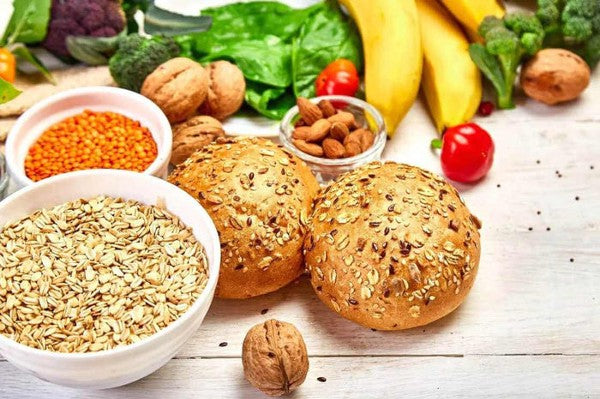
- Fiber-rich (prebiotic) foods — the plant fibers your own bacteria ferment into SCFAs. Prebiotics like resistant starch in green bananas and the fibers in the best prebiotic foods are what fuel the metabolite pathway above.
A realistic caveat: the live microbes in fermented foods are mostly transient. Researchers conclude there is “very limited clinical evidence for the effectiveness of most fermented foods” for measurable health outcomes, and that more high-quality human trials are needed.[7] Fermented and high-fiber foods are sensible parts of a varied diet — not a treatment.
Do probiotics actually improve mood and stress? What the evidence shows — and doesn’t
This is where honesty matters. The mechanisms above are real research directions, but the human payoff is far from proven. The authors of a major gut–brain review state plainly that “until more evidence behind the use of probiotics as therapy for anxiety and depressive disorders is available, probiotics in any form cannot be considered a reliable therapy…as compared to psychiatric medications.”[2] The microbiota–gut–brain field likewise notes that “animal models have been paramount” in linking microbes to brain processes, while “translational human studies are ongoing.”[5] The 2013 paper that named psychobiotics concluded that “results from large scale placebo-controlled studies are awaited.”[1]
The takeaway: a healthy gut microbiome is one input into the gut–brain axis, and supporting it with fiber, fermented foods and (where appropriate) probiotics is reasonable. But no probiotic is a substitute for mental-health care. If you are struggling with mood, anxiety, stress or depression, talk to a licensed health care provider.
What about probiotics and autism?
Autism is one area where the gut–brain axis has drawn research interest, partly because gastrointestinal symptoms are common in autistic people. The evidence here is preliminary. A 2024 study published in mSystems — a pilot, open-label study, not a randomized controlled trial — reported that a precision synbiotic (probiotic plus prebiotic) was associated with shifts in the gut microbiome and changes in some gastrointestinal and other measures in children and adults with autism spectrum disorder.[8] Because the study was open-label with no placebo group, the authors note the results “may include some placebo effects,” and larger randomized controlled trials are needed to draw firm conclusions.[8] This is a structure/function research finding about the microbiome, not evidence that probiotics treat or cure autism.
Are psychobiotics safe?
For most healthy people, common probiotic foods and supplements are generally well tolerated, but they are not risk-free. The NIH’s NCCIH cautions that “cases of severe or fatal infections have been reported in premature infants who were given probiotics,” and that potential risks also include infections and antibiotic-resistance transfer in vulnerable people.[3] If you are pregnant, people with weakened immune systems, seriously ill, or considering a probiotic for a child, talk to your health care provider first.
Where personalization fits in
Here is the gap a one-size-fits-all probiotic can’t close: which strains and which fibers actually move the needle depends on the bacteria already living in your gut, and everyone’s microbiome is different. The gut–brain pathways above all run through your specific community of microbes and the metabolites they make.
Flore takes a personalized approach. Using a CLIA-certified laboratory’s DNA sequencing of your stool sample, Flore maps which bacteria live in your gut and then manufactures a personalized probiotic-plus-prebiotic formula matched to your results — not a generic blend. The lab test is simply the means to build the formula; the product is the personalized probiotic. Build a formula from your gut data →
This article is for general educational purposes and is not medical advice. It describes the normal structure and function of the gut microbiome and the gut–brain axis and is not intended to diagnose, treat, cure, or prevent any disease, including depression, anxiety, stress, or autism. Probiotics are not a substitute for mental-health care. Talk to a licensed health care provider about your individual needs.
Sources
- Dinan TG, Stanton C, Cryan JF. “Psychobiotics: a novel class of psychotropic.” Biological Psychiatry, 2013;74(10):720–726. pubmed.ncbi.nlm.nih.gov/23759244/
- Clapp M, Aurora N, Herrera L, Bhatia M, Wilen E, Wakefield S. “Gut microbiota’s effect on mental health: The gut-brain axis.” Clinics and Practice, 2017;7(4):987. PMC5641835. pmc.ncbi.nlm.nih.gov/articles/PMC5641835/
- “Probiotics: What You Need To Know.” National Center for Complementary and Integrative Health (NCCIH), NIH. nccih.nih.gov/health/probiotics-what-you-need-to-know
- “Your Digestive System & How It Works.” National Institute of Diabetes and Digestive and Kidney Diseases (NIDDK), NIH. niddk.nih.gov/health-information/digestive-diseases/digestive-system-how-it-works
- Cryan JF, O’Riordan KJ, Cowan CSM, et al. “The Microbiota-Gut-Brain Axis.” Physiological Reviews, 2019;99(4):1877–2013. pubmed.ncbi.nlm.nih.gov/31460832/
- Appleton J. “The Gut-Brain Axis: Influence of Microbiota on Mood and Mental Health.” Integrative Medicine: A Clinician’s Journal, 2018;17(4):28–32. PMC6469458. pmc.ncbi.nlm.nih.gov/articles/PMC6469458/
- Dimidi E, Cox SR, Rossi M, Whelan K. “Fermented Foods: Definitions and Characteristics, Impact on the Gut Microbiota and Effects on Gastrointestinal Health and Disease.” Nutrients, 2019;11(8):1806. PMC6723656. pmc.ncbi.nlm.nih.gov/articles/PMC6723656/
- Phan J, et al. “Personalized precision synbiotic and the gut microbiome: a pilot open-label study for autism spectrum disorder.” mSystems, 2024. DOI: 10.1128/msystems.00503-24. journals.asm.org/doi/10.1128/msystems.00503-24
Want a probiotic built from your actual gut data?
Flore uses a CLIA-certified lab's DNA sequencing of your stool sample to map your gut bacteria, then manufactures a personalized probiotic + prebiotic formula matched to your results.
Build a formula from your gut data →
Related: see the honest evidence round-up in probiotics for depression and anxiety.
New from Flore: read our plain-language explainer on what the neurobiome is, or take the Neurobiome Test to map your own gut–brain microbiome and get matched to NDIs.
Related reading: Does the gut produce serotonin? — why roughly 90–95% of your body’s serotonin is made in the gut, and how gut bacteria factor in.
Not sure where to start with your gut?
Ask the Flore Microbiome Concierge — a guided, personalized walkthrough of testing, your results, and a formula matched to your goals.
Talk to the Concierge →Explore the science of the neurobiome →
Related reading: Does the gut produce GABA? — how gut bacteria make the body’s main calming neurotransmitter — and does the gut produce dopamine?
Go deeper on GoodOnes: What Are Neurobiome-Directed Interventions (NDIs)? Beyond Psychobiotics →