

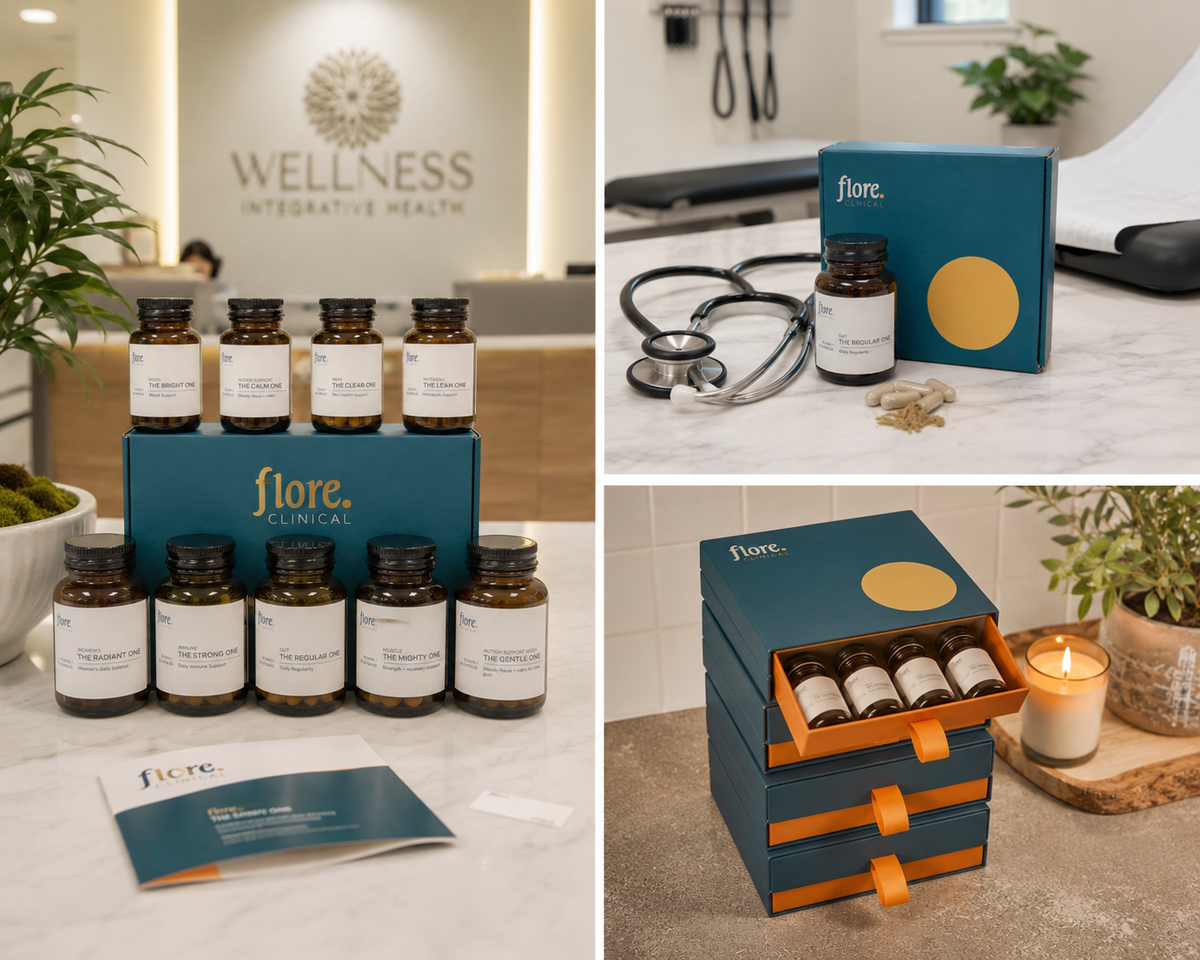
Your gut and your brain are wired together, and a growing body of research is asking whether the microbes in your gut can nudge how anxious or calm you feel. The honest answer: the gut-brain axis is real and well documented, but using probiotics to ease anxiety is still emerging science. Flore calls the mood-and-calm slice of your gut microbiome your neurobiome, and calls probiotics built for it neurobiome-directed interventions (NDIs), for everyday support of calm, not treatment.
A wellness insight, not a diagnosis. NDIs and the Neurobiome Test give you insight into your gut-brain microbiome. They do not diagnose, treat, cure, or prevent anxiety, depression, or any condition.
What the gut-brain axis actually does
The gut-brain axis is a two-way communication network linking your central nervous system with the enteric nervous system, the dense web of neurons lining your gut. A major channel in that network is the vagus nerve, which carries signals from the gut environment up to the brain.[1]
Your gut microbes are active participants in that conversation. Research shows they can influence the nervous system by producing molecules that act as neurotransmitters, including GABA, serotonin, melatonin, histamine and acetylcholine.[1] GABA matters here because it is the brain's primary calming, or inhibitory, neurotransmitter. Serotonin matters too, and it is strikingly gut-centered: about 95% of the body's serotonin is produced in the intestine.[2]
The cite-able version: The gut-brain axis is a bidirectional network (vagus nerve + enteric nervous system). Gut microbes make neurotransmitters, including GABA and serotonin, and about 95% of the body's serotonin is made in the gut.[1][2]
So can probiotics reduce anxiety?
This is where honesty matters. A 2020 review in Brain and Behavior looked at the clinical literature on probiotics for anxiety and depressive disorders. It found that probiotics positively affected anxiety symptoms in roughly 44% of the studies reviewed (and depressive symptoms in about 54%), and concluded the results were encouraging but preliminary, limited by a shortage of trials and by how different the studies were from one another.[3]
In plain terms: the signal is interesting, the mechanism is plausible, and the evidence is not yet strong or consistent enough to call any probiotic an anxiety treatment. That is exactly why Flore talks about NDIs as support for calm, a structure-and-function idea, rather than a therapy.
Where personalization comes in
Most anxiety-and-gut studies test one fixed probiotic in everyone. But your gut community is yours. Flore's approach is to read your microbiome with the gut-brain axis in focus, then build a formula from your own data instead of a shelf guess. If you just want to feel the gut-brain connection first, the easiest starting point is a targeted NDI.
Try The Calm One — $49 → Explore the Neurobiome Test →
When you are ready to stop guessing and know your own gut-brain microbiome, you ascend to the Neurobiome Test, delivered through Flore's Test-to-Treat program ($658.50 with the at-home test included, or $564 if you bring your own results).
Frequently asked questions
Can probiotics help with anxiety?
The evidence is early and mixed. In one review of the gut-brain literature, probiotics improved anxiety symptoms in about 44% of the studies examined, and the authors called the results encouraging but preliminary. Flore frames NDIs as everyday support for calm, not a treatment for an anxiety disorder.
How does the gut affect anxiety?
Your gut and brain talk through the gut-brain axis, a two-way network that includes the vagus nerve. Gut microbes take part by producing molecules that act as neurotransmitters, including GABA, the brain's main calming signal, and serotonin. About 95% of the body's serotonin is made in the gut.
What is the neurobiome?
The neurobiome is Flore's people-first name for the mood-, calm-, focus- and sleep-influencing slice of your gut microbiome, the organisms that communicate with your brain through the gut-brain axis. It is an emerging term Flore is pioneering, not an established medical category.
Can a probiotic cure my anxiety?
No. NDIs are for everyday support of calm and mood. They do not treat, cure, or prevent anxiety or any medical condition, and a Neurobiome Test is not a diagnosis. If anxiety is affecting your life, talk to a licensed clinician.
Sources
- Carabotti M, Scirocco A, Maselli MA, Severi C. The gut-brain axis: interactions between enteric microbiota, central and enteric nervous systems. Ann Gastroenterol, 2015. PMC4367209
- Serotonergic Mechanisms Regulating the GI Tract. Handb Exp Pharmacol, 2017. PMC5526216
- Gambaro E, et al. "Gut-brain axis": Review of the role of the probiotics in anxiety and depressive disorders. Brain Behav, 2020. PMC7559609
Related: hormones are part of the picture too — see how the gut recycles estrogen in the estrobolome: your gut, estrogen, and mood.
Not sure where to start with your gut?
Ask the Flore Microbiome Concierge — a guided, personalized walkthrough of testing, your results, and a formula matched to your goals.
Talk to the Concierge →Go deeper on the neurobiome and the gut-brain axis →
Go deeper on GoodOnes: Anxiety & the Gut-Brain Axis — The Bright One →