

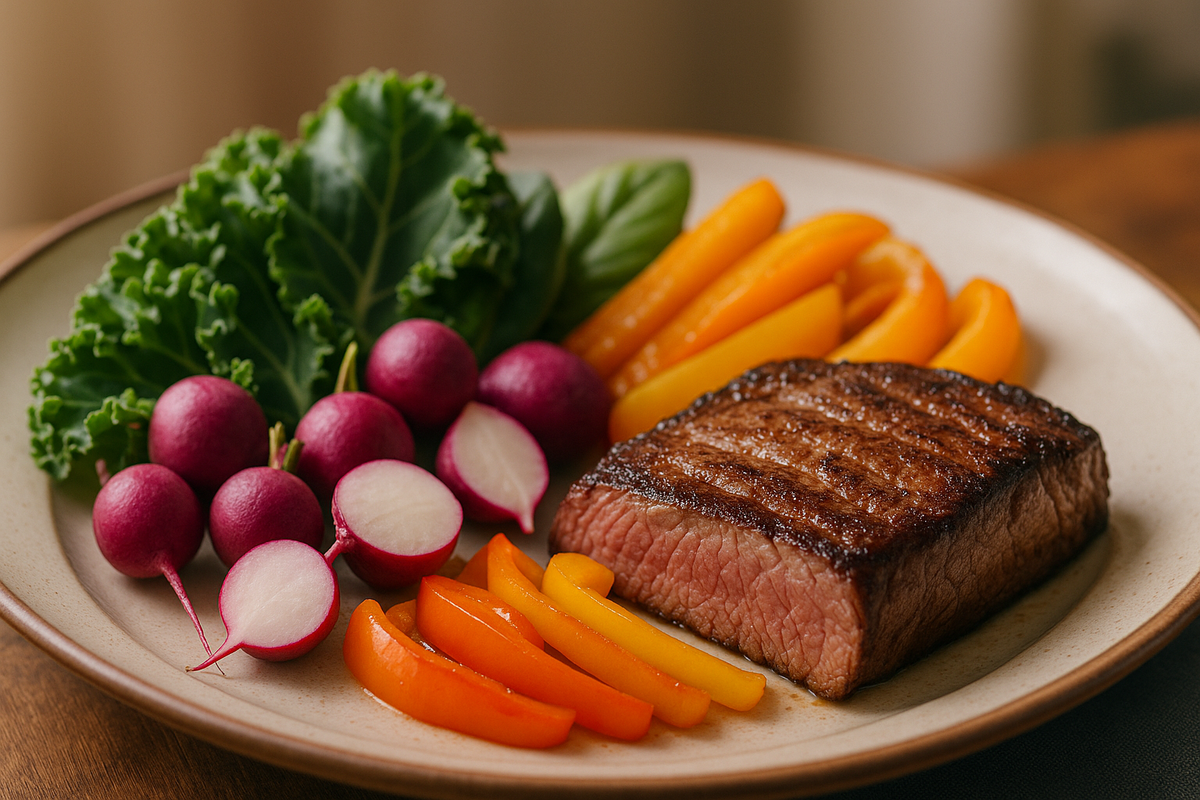
The carnivore diet has gone from fringe to mainstream faster than any dietary trend since paleo. The case for it is real: elimination of processed food, blood sugar stabilization, and for many people with autoimmune and inflammatory conditions, a genuine reduction in symptoms. There are carnivore converts with bloodwork that would embarrass the average vegan.
There is also a microbiome cost that most carnivore advocates do not talk about, and that cost is measurable within days of starting the diet — not months. If you are on carnivore or thinking about it, you should understand this mechanism, not so you will quit, but so you can make a more informed decision about what you are trading.
What happens to your microbiome in the first week
The landmark paper here is the David et al. (2014) study in Nature, which put subjects on either a plant-based or animal-based diet for five days and measured their gut communities daily. The animal-based group showed a rapid, significant shift in microbial composition that began within 24–48 hours and was fully established by day four:
- Bilophila wadsworthia bloomed — a bile-tolerant species that has been linked to inflammatory bowel disease and is driven by bile produced in response to dietary fat.
- Bifidobacterium and Roseburia populations collapsed — two of the primary butyrate-producing genera. These species depend on fermentable carbohydrate for energy. Remove the substrate and their populations crater.
- Faecalibacterium prausnitzii, sometimes called the most important bacterium in the human gut for its anti-inflammatory butyrate output, dropped measurably in almost every subject.
When the subjects returned to their normal diet, most (not all) of these shifts partially reversed within a few days. Partially. The restoration is not 1:1, and repeated cycling on and off carnivore appears to progressively impair the recovery.
The butyrate problem
Butyrate is the short-chain fatty acid that colonocytes (the cells lining your colon) use as their primary fuel. It is also the molecule most strongly associated with colon-cancer protection, mucosal barrier integrity, and the anti-inflammatory signaling that keeps your gut lining intact. Virtually all of your butyrate comes from bacterial fermentation of fiber. No fiber, no fermentation, no butyrate.
This is not a hypothetical. Long-term carnivore dieters who have undergone microbiome testing consistently show low-to-absent butyrate producers and higher fecal pH (a marker that fermentation has essentially stopped). Their colons are running on ketone bodies from the liver — a functional fallback, but not the same thing, and not what your colon evolved to use.
The clinical significance of chronic butyrate deficit is actively debated. The short-term data (1–3 years) for committed carnivore dieters is not alarming. The 10-year and 20-year data does not exist yet because the diet has not been around that long in any significant population. The honest answer is: we do not know what decades of low-butyrate colonocytes look like, and the mechanism is concerning enough that the question deserves to be asked.
What long-term keto looks like vs. strict carnivore
These are meaningfully different diets with meaningfully different microbiome consequences:
- Strict carnivore (no plants): Fermentable fiber approaches zero. Microbial diversity collapses, butyrate producers disappear, bile-tolerant species dominate. This is the most dramatic microbiome shift in any mainstream dietary approach.
- Standard keto (under 20g net carbs, including fibrous vegetables): Microbial diversity is reduced relative to omnivore, but not collapsed. People eating leafy greens, cruciferous vegetables, and avocado even in small quantities maintain a functional butyrate-producing population, particularly if they supplement Bifidobacterium.
- Liberal low-carb (under 100g carbs): Essentially no negative microbiome signal distinguishable from standard omnivore diets in most studies.
The harm-reduction stack for carnivore dieters
If you are on carnivore and not planning to stop — because your autoimmune markers are down, your mental clarity is improved, or you have tried everything else — there are things you can do to offset the microbiome impact:
- Supplement Bifidobacterium directly. You cannot feed your Bifidobacterium without fiber, but you can maintain a seeded population at low levels with a daily probiotic. B. longum and B. breve at 10–20B CFU daily. They will be at lower abundance than in an omnivore gut, but detectable and functional is better than absent.
- Add animal-source prebiotics. Bone broth contains collagen-derived compounds that modestly support gut barrier integrity — not a substitute for fiber fermentation, but a useful baseline. Some carnivore dieters add dried chicory root or psyllium husk as a dietary exception specifically for microbiome maintenance — technically not carnivore, but a practical tradeoff.
- Prioritize organ meats over muscle meat. Liver and kidney contain small amounts of glycogen and are fermented differently from pure muscle protein. The microbiome impact of a nose-to-tail carnivore diet is substantially less severe than the same calories from chicken breast alone.
- Consider cycling. A single plant-heavy day per week maintains butyrate-producing populations more effectively than the 5+2 split you might expect. The David (2014) paper suggests the butyrate producers begin recovering within 24 hours of fiber reintroduction. Weekly cycling may preserve enough of the population to matter.
The honest bottom line
Carnivore is not inherently incompatible with a healthy gut microbiome if you are intentional about it. It is incompatible with the gut microbiome most people have when they start it, and the transition is not neutral.
If you are considering carnivore for its potential benefits, the evidence genuinely supports a trial for inflammatory and autoimmune conditions. If you commit to it, treat your microbiome as a system you are managing differently — not one you can ignore. The bacteria are still there. They are just running on a much smaller budget, and the ones you want most are the ones most dependent on what you cut.
The most studied and verified long-term carnivore dieters — Shawn Baker's cohort, the Michaels data from Alberta — show relatively stable bloodwork on standard panels. None of them have published microbiome sequencing data. That silence is not proof of harm. It is not proof of safety either.
Want a probiotic tuned to your ecosystem, not a CFU number?
Flore builds a personalized formula from your microbiome data.
Shop Flore →
Not sure where to start with your gut?
Ask the Flore Microbiome Concierge — a guided, personalized walkthrough of testing, your results, and a formula matched to your goals.
Talk to the Concierge →