

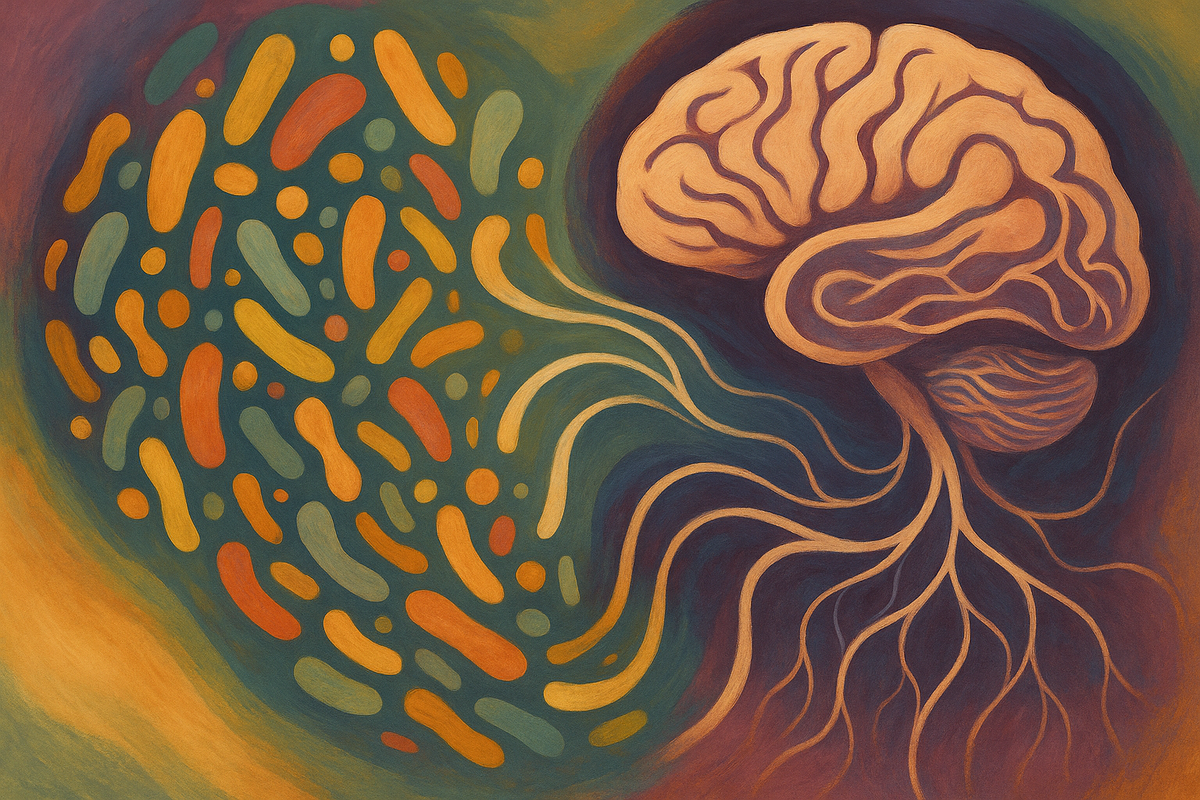
Full transparency: unlike our autism work, Flore has no proprietary Alzheimer's dataset — so this drop is built on published gut-brain research, not our own numbers. The science is striking: gut dysbiosis, systemic inflammation, and reduced microbiome diversity are increasingly linked to amyloid pathology and cognitive decline.
What the published research shows
A growing body of work connects the gut microbiome to neuroinflammation, the gut–brain axis, and markers of Alzheimer's disease. Short-chain fatty acids, gut-barrier integrity, and specific bacterial shifts appear repeatedly in cognitive-decline studies. It is early, associational science — not proof that a probiotic prevents or treats Alzheimer's.
Where precision microbiome science fits
Our condition model already addresses cognitive symptoms — brain fog, memory, mental clarity — through the NEURO system. The same precision method behind our autism results (sequence the gut, match the strains, retest) is the logical way to study cognition seriously. If we build Alzheimer's-specific data, you'll see it here first — with the numbers, not the hype.
Not sure where to start with your gut?
Ask the Flore Microbiome Concierge — a guided, personalized walkthrough of testing, your results, and a formula matched to your goals.
Talk to the Concierge →