

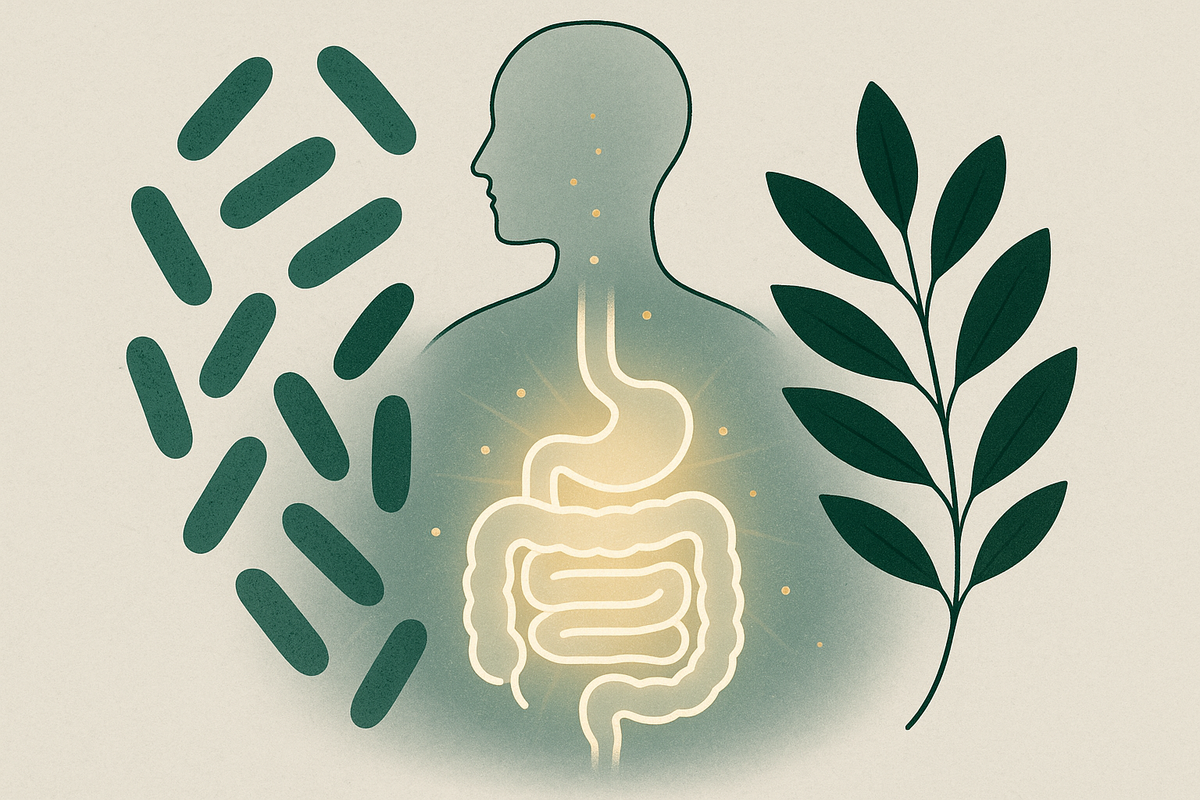
Where is serotonin actually made?
Specialized cells lining the intestine — enterochromaffin cells — produce the large majority of the body's serotonin. Landmark research showed that indigenous gut bacteria help regulate this production: the microbiome isn't a bystander to serotonin, it's part of the manufacturing process [1]. That single fact reframes the gut as a serotonin organ.
Serotonin, tryptophan, and the microbiome
Serotonin is built from the amino acid tryptophan, and gut bacteria influence how tryptophan is routed — toward serotonin or down other metabolic paths. Studied Lactiplantibacillus plantarum strains have been shown to modulate serotonin signaling in animal models, shifting mood- and gut-related behavior [2]. Because serotonin also drives gut motility, this is one molecule sitting at the intersection of digestion and mood.
Why "more serotonin" isn't a probiotic promise
It's tempting to read "gut makes serotonin" as "take a probiotic, get more serotonin, feel better." The real science is more specific: effects depend on the strain studied, and much of the work is in animal models. What's solid is the biology of the link — a shared molecule, a shared manufacturing site, and a microbiome that helps regulate both. Flore's approach is to map which of these strains are present or missing in your gut, rather than assume. Read the full NDI (neurobiome-directed intervention) guide →
References
- Yano JM, et al. Indigenous bacteria from the gut microbiota regulate host serotonin biosynthesis. Cell. 2015;161(2):264–276. cell.com
- Liu YW, et al. Psychotropic effects of Lactobacillus plantarum PS128 in early life-stressed and naïve adult mice. Behav Brain Res. 2016. pubmed.ncbi.nlm.nih.gov